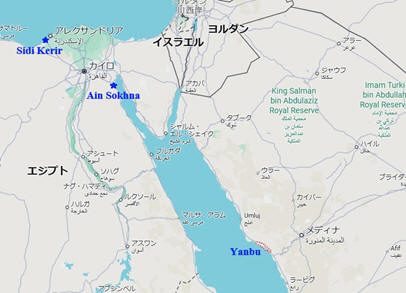
The announcement follows reports that Saudi Aramco has instructed several buyers of its Arab Light crude to load shipments at Yanbu on the Red Sea coast, bypassing the Strait of Hormuz.
The Strait of Hormuz remains effectively closed to maritime traffic following a weekend strike by the US and Israeli military that caused a massive vessel backlog.
Aramco, the world’s largest oil exporter, typically ships the majority of its crude from the Arabian Gulf. However, the company has reportedly begun surveying shipping firms and Asian customers about switching loading operations to the Red Sea to avoid the volatile waterway.
The logistical pivot relies heavily on Saudi Arabia’s internal infrastructure. Aramco operates a 745-mile "East-West" pipeline with a capacity of 5 million barrels per day, allowing it to move crude from eastern fields to the Red Sea port of Yanbu.
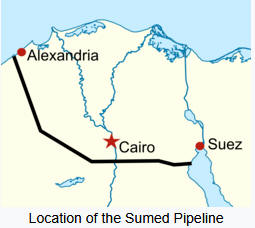
From there, Egypt’s Sumed pipeline offers a critical link to the Mediterranean.
"Sumed is not a direct alternative to the Strait of Hormuz, but it acts as a complementary link within a broader logistical chain," the Egyptian Petroleum Ministry said in a statement.
Stretching from Ain Sokhna on the Gulf of Suez to Sidi Kerir on the Mediterranean, the Sumed pipeline has a capacity of approximately 2.5 million barrels per day.
The line is managed through a joint venture in which Egypt holds a 50% stake, with Saudi Aramco, Kuwait, the United Arab Emirates, and Qatar holding the remainder.
The shift comes as Aramco grapples with the impact of widening hostilities in the Middle East. The company was recently forced to shutter its Ras Tanura refinery following a drone attack.
Speculations about the closure of the Strait of Hormuz began last year during the 12-day Israel-Iran conflict in June, with Pakistan, which relies heavily on the Strait for oil imports, exploring pipeline alternatives.
Analysts warn that if the maritime slowdown persists, regional storage tanks could reach capacity, potentially forcing production cuts.
By utilizing the Sumed line, Saudi Arabia can move crude to European markets while bypassing the Suez Canal in certain scenarios, provided the oil first reaches the Red Sea via the kingdom’s cross-country pipeline.